

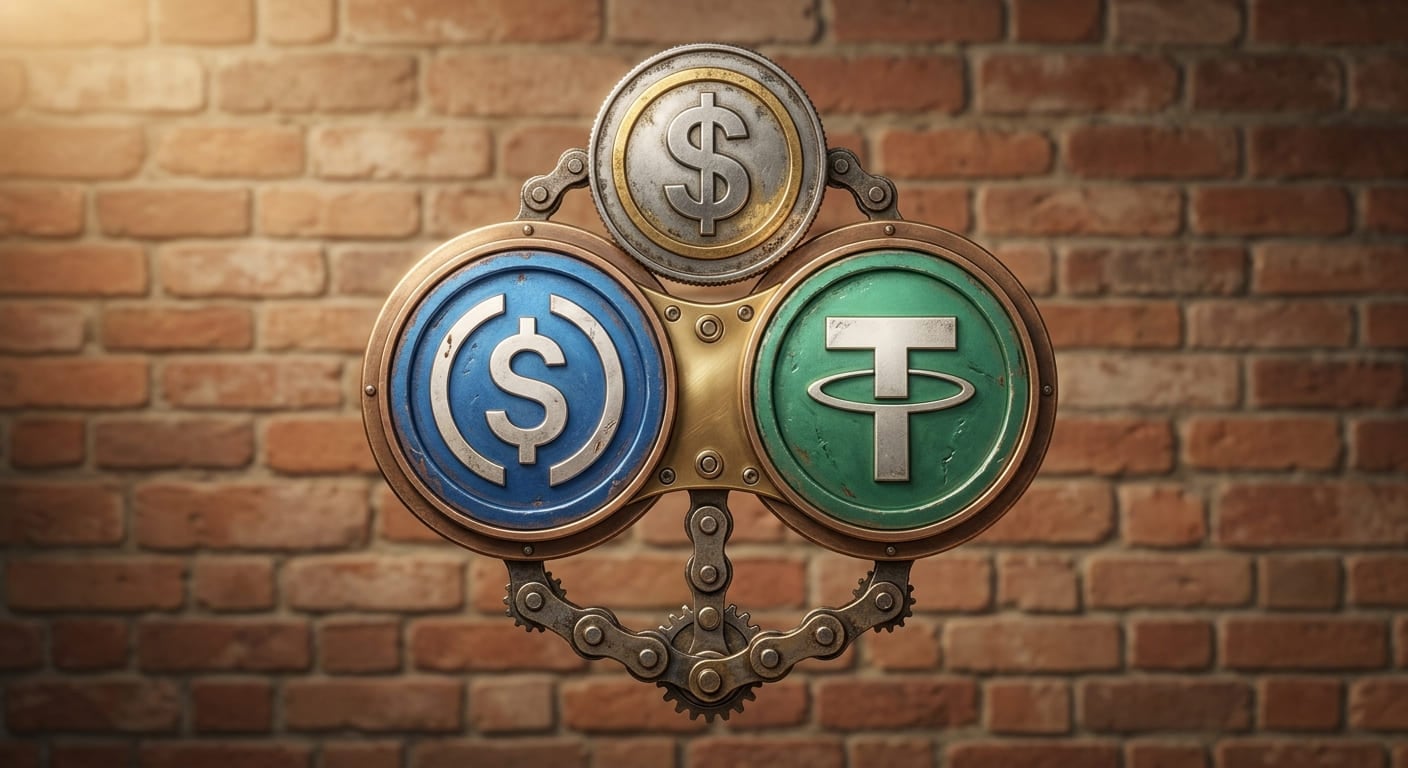
USDC and USDT are the two most widely used stablecoins, and both aim to do the same thing: hold a value close to 1 US dollar. Where they differ is in who issues them, how their reserves are made up, how much they disclose, which blockchains they run on and how they fit into regulation. In short, USDT tends to win on liquidity and reach on networks like Tron, while USDC is generally seen as the more transparency- and compliance-focused option. Neither is risk-free, and knowing how they compare helps you pick the right one for each job.
What USDC and USDT have in common
A stablecoin is a token designed to keep a steady price against a reference asset, usually the US dollar. If you want a refresher on the basics, our guide on what USDT is and how it works walks through the mechanics.
USDC and USDT share a few core traits:
- Dollar peg: both target a 1:1 value with the US dollar.
- Centralized backing: a company issues the tokens and states that it holds reserves to support them.
- Multichain presence: both live on several blockchains, each with its own fees and speeds.
- A safe harbor inside crypto: traders use them to step out of volatile assets without leaving the market.
Key differences between USDC and USDT
Issuer
USDT is issued by Tether, one of the earliest stablecoin companies. USDC is issued by Circle, a firm built from the start around regulation and digital payments. That difference in origin shapes most of the others.
Reserves and transparency
Both issuers publish regular reports on the reserves behind their tokens, but the makeup and level of detail differ. Circle has historically said its reserves are concentrated in cash and short-dated US Treasuries. Tether also holds a large share in Treasuries, but its portfolio has included other assets, and for years it faced criticism over limited disclosure, something it has worked to improve.
The practical takeaway: no stablecoin is risk-free. You are relying on the issuer to manage its reserves and honor redemptions. It is worth checking each issuer's latest reserve report [DATA TO CONFIRM: date and composition of the latest report].
Liquidity and adoption
USDT has historically been the largest stablecoin by market cap and trading volume, and it is the default quote currency on many exchanges, so you will usually find more markets against USDT. USDC has a strong footprint in decentralized finance (DeFi) and regulated payment services.
Supported networks
This is one of the most practical differences. USDT is especially popular on Tron (TRC-20), a network known for low fees and heavy stablecoin traffic. Tron users typically need some TRX to cover network fees, and it is common to move between the two, converting TRX to USDT as needs change.
USDC has a big presence on Solana, Ethereum and other compatible chains. Circle ended support for USDC on Tron in 2024, so if you work on Tron, USDT will usually be your stablecoin. If you are active in the Solana ecosystem, many users swap SOL for USDC to keep a stable balance on the same network.
Whenever you deposit or withdraw, the network must match on both ends. Our article on network fees and confirmations explains how to choose the right one.
Regulation
Regulatory treatment varies by region. In the European Union, the MiCA framework sets specific rules for stablecoin issuers, and Circle announced in 2024 that USDC complied through its European entity. USDT's status has led some European platforms to restrict it for EU users [DATA TO CONFIRM: current regulatory status of USDT under MiCA]. Wherever you are, check which stablecoins your platform supports in your country and seek professional advice on legal or tax questions.
USDC vs USDT at a glance
- Issuer: USDC → Circle. USDT → Tether.
- Price target: both, 1 USD.
- Liquidity: USDT usually has more pairs and volume; USDC is strong in DeFi and payments.
- Key networks: USDT is big on Tron and Ethereum; USDC is big on Solana and Ethereum.
- Transparency: both publish reports; USDC is generally viewed as more conservative.
- EU regulation: USDC is MiCA-aligned; USDT availability depends on the platform.
How people actually use them
As a base for trading other coins
Many traders treat stablecoins as the starting point for buying other crypto and the landing spot when they sell. Say you hold XRP and want to cut your exposure to volatility: you can convert XRP to USDT and park the value in a stable balance. When you want back in, you can swap USDT to XRP just as easily.
To move between stablecoins
Switching from one stablecoin to the other is also common: a given network may only support one of them, a DeFi protocol may run on USDC, or a market may be deeper in USDT. In those cases you can convert USDC to USDT or go the other way and exchange USDT for USDC.
For transfers and payments
Because their value stays steady, stablecoins are handy for sending funds between platforms or people without worrying about price swings mid-transfer. Your choice of network has a big impact on the final cost.
USDC or USDT: which should you choose?
There is no single right answer, but these guidelines help:
- If you want maximum liquidity and trading pairs: USDT usually offers more markets.
- If you use Tron: USDT is the natural fit, since USDC is no longer supported there.
- If you are in Solana or DeFi: USDC is widely used across that ecosystem.
- If transparency and regulatory alignment matter most: USDC tends to fit that priority better.
- If you want to spread issuer risk: holding some of each reduces reliance on a single company.
Risks to keep in mind
"Stable" does not mean risk-free:
- Depegging: under market stress, a stablecoin can trade below 1 USD for a while. It has happened to several stablecoins before.
- Issuer risk: you depend on the company managing reserves well and meeting redemptions.
- Regulatory risk: rule changes can affect whether a stablecoin is available in your country or on your platform.
- Operational risk: sending funds on the wrong network or to the wrong address can mean losing them.
- Frozen funds: centralized issuers can block addresses in certain circumstances.
Common mistakes with USDC and USDT
- Picking the wrong network: for example, sending USDT on Ethereum to an address expecting Tron.
- Forgetting the gas token: some networks require their native coin to pay fees.
- Assuming they always equal 1 USD: the peg is a target, not a guarantee.
- Ignoring costs: network and conversion fees vary by platform and timing.
How to convert between USDC, USDT and other crypto on Palzea
On Palzea you can move between stablecoins and other cryptocurrencies with the swap tool, with the exchange rate shown before you confirm and funds settled straight to your balance. It takes three steps:
- Choose the asset you are converting from and to (for example, USDC and USDT).
- Enter the amount and review the rate and estimated result.
- Confirm and check your updated wallet balance.
Security is part of the process too. Before trading, we recommend you secure your account with two-factor authentication, always double-check the network on deposits and withdrawals, and keep your login details up to date.
FAQ
Is USDC safer than USDT?
It depends on what you value. USDC is generally seen as more conservative in its reserves and is aligned with the EU's MiCA rules. USDT has deeper liquidity and a longer track record. Neither is risk-free, so do your research and consider diversifying.
Can I swap USDT for USDC at any time?
Generally yes, as long as the platform lists the pair and there is liquidity. Expect small price differences and possible conversion fees.
Are USDC and USDT always worth exactly 1 dollar?
Not exactly. They usually trade very close to 1 USD, but supply and demand can push them slightly off, and during market stress the gap can widen.
Which network is best for sending stablecoins?
Whichever network both the sender and receiver support at a reasonable cost. Tron is popular for USDT and Solana for USDC, but matching networks on both ends is what matters.
Do stablecoins have tax implications?
They can, for example when you convert them into other crypto or fiat. Rules vary by country and change over time, so it is best to speak with a tax professional.
The bottom line
USDC and USDT do the same job, but they are not interchangeable in every situation. USDT stands out for liquidity and its reach on networks like Tron; USDC for its transparency focus, strong Solana presence and regulatory alignment. The right choice depends on the network you use, the markets you trade and how much risk you are comfortable with.
If you want to start moving between stablecoins and other crypto, you can do it on Palzea with clear information before every trade.
Risk disclaimer: cryptocurrencies, including stablecoins, carry risk. Stablecoins can lose their dollar peg, and other crypto assets can be highly volatile. This content is for information only and is not financial, legal or tax advice. Only invest what you can afford to lose.