


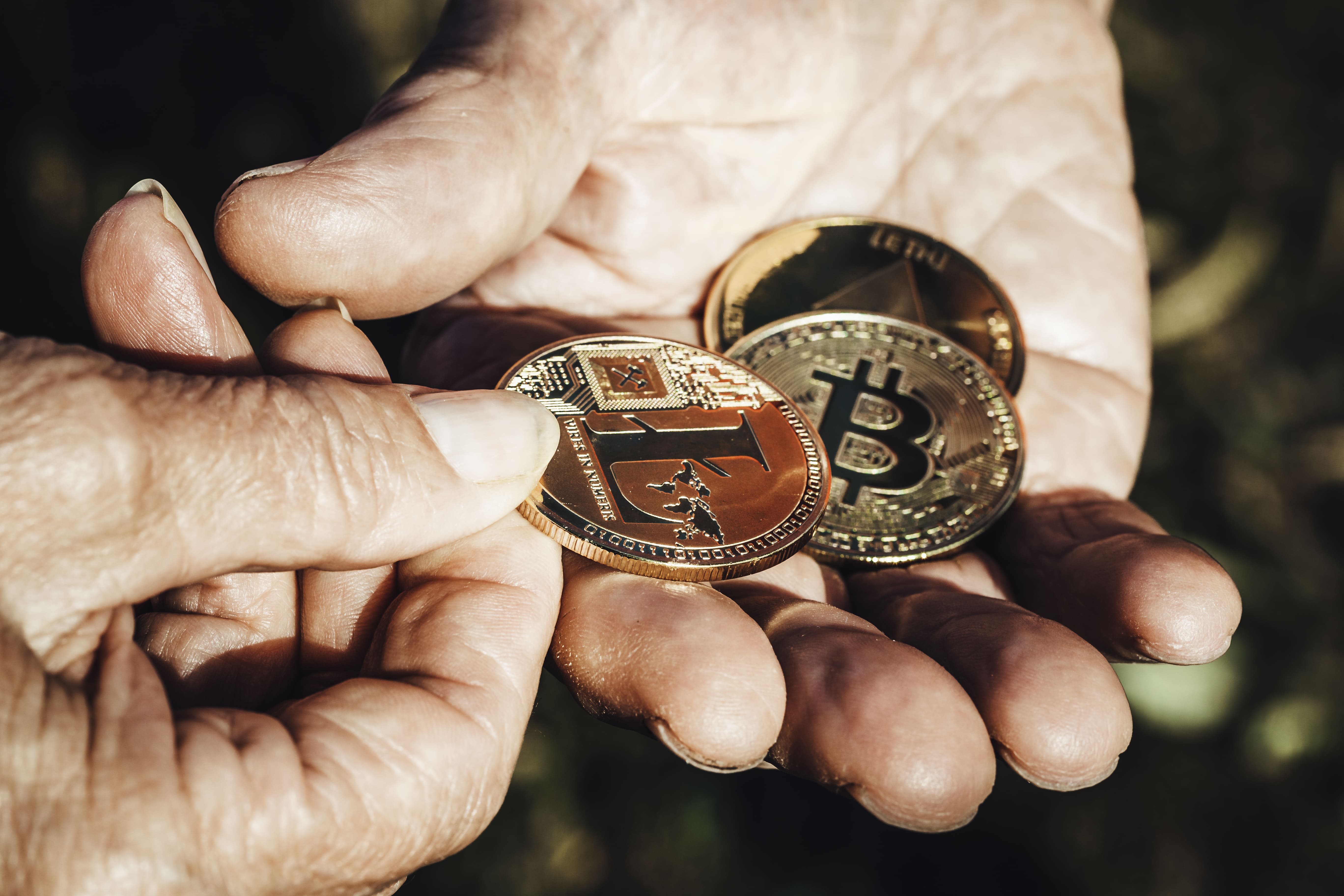
The Spanish Tax Agency may know that you own cryptocurrency through information reported by certain exchanges, bank transfers, tax disclosures and the analysis of transactions recorded on public blockchains.
This does not mean that the tax authority automatically knows every private key or wallet controlled by an individual. However, it may connect an identity to specific transactions when funds pass through an identified platform, a bank account or a service that applies customer identification procedures.
Spain already has several cryptocurrency reporting obligations. In addition, the European DAC8 rules expand the exchange of tax information concerning crypto-assets based on data collected from 2026 onwards.
This guide explains how the Spanish Tax Agency knows that you own cryptocurrency, which information exchanges may report and when crypto transactions must be declared.
Can the Spanish Tax Agency know that I own cryptocurrency?
Yes. The Spanish Tax Agency has several ways of detecting that a person owns or uses cryptocurrency.
The main sources include:
Information reported by exchanges and custodians.
- Spanish information returns 172, 173 and 721.
- Transfers made through bank accounts.
- Know Your Customer procedures.
- The analysis of public blockchain transactions.
- Information requests during tax reviews or investigations.
- International exchanges of tax information.
The tax authority may compare this information with an individual's income tax return, reported assets and other financial data.
How does the Spanish Tax Agency know you own cryptocurrency?
1. Information reported by exchanges
Centralized exchanges normally request personal information to verify the identity of their customers.
This process is known as Know Your Customer, or KYC, and may include:
- Full name.
- Identity document.
- Tax identification number.
- Residential address.
- Country of tax residence.
- Bank account or payment method.
When a platform is required to report tax information, these details make it possible to associate transactions with a specific person.
Depending on the applicable rules, the reported information may include balances, purchases, sales, exchanges, transfers and other crypto-asset transactions.
2. Spanish tax form 172
Form 172 is an information return concerning balances in virtual currencies.
It is not normally filed by the individual customer. It is filed by certain Spanish-resident entities and individuals that safeguard private cryptographic keys on behalf of third parties.
The return provides information about virtual currencies held in custody and the people associated with those balances.
Therefore, when you use a provider required to file this return, the Spanish Tax Agency may receive information about the assets held in your account.
3. Spanish tax form 173
Form 173 is an information return concerning transactions involving virtual currencies.
It may include transactions such as:
- Purchases of cryptocurrency using euros or another currency.
- Sales of cryptocurrency.
- Exchanges between different cryptocurrencies.
- Transfers of virtual currencies.
- Certain acquisitions or disposals of digital assets.
Certain providers that are resident in Spain or have a permanent establishment in Spain must file this return when they participate in these transactions.
The customer does not usually file form 173 for ordinary account activity. The provider subject to the reporting obligation submits the information.
4. Spanish tax form 721
Form 721 is an information return concerning virtual currencies located outside Spain.
Unlike forms 172 and 173, this return may need to be filed by the taxpayer.
As a general rule, the obligation should be reviewed when the combined value of cryptocurrency held by foreign custodians exceeds €50,000 on 31 December.
The filing period runs from 1 January to 31 March of the following year.
Form 721 is an information return. Filing it does not necessarily mean that there is a capital gain or tax payment due.
It is also important to distinguish between cryptocurrency held by a foreign custodian and assets stored directly in a self-custody wallet.
5. Bank transfers
Bank account activity is another way in which cryptocurrency transactions may be identified.
When you send euros from your bank account to an exchange, the transfer leaves a record. The same applies when money is withdrawn from a cryptocurrency platform to a bank account.
The transfer reference, recipient, IBAN and amount may indicate that the funds were sent to or received from a crypto-asset service provider.
A bank transfer does not, on its own, prove that a taxable gain was made. However, it may cause the tax authority to request additional information when the amounts do not match the taxpayer's return.
6. Blockchain analysis
Transactions performed on networks such as Bitcoin and Ethereum are recorded on public blockchains.
A blockchain address does not normally display the owner's name directly. However, all transactions involving that address can be viewed and analyzed.
If an address is connected to an identity, for example because it received funds from a KYC exchange account, it may be possible to follow part of its blockchain activity.
Specialized tools can group addresses, detect transaction patterns and trace the movement of certain funds.
A public blockchain provides pseudonymity, but not necessarily anonymity.
7. Information requests and tax investigations
The Spanish Tax Agency may request information directly from a taxpayer, financial institution or service provider.
During a tax review, it may ask for documents such as:
- Exchange transaction histories.
- Purchase and sale records.
- Bank statements.
- Wallet addresses.
- Tax reports provided by platforms.
- Evidence concerning the source of funds.
- Deposit and withdrawal records.
It is therefore advisable to keep a complete transaction history, even when a platform stops operating or closes an account.
What changes under DAC8?
DAC8 is a European directive that expands cooperation between tax authorities to cover information about crypto-assets.
Affected providers must collect information relating to users and transactions from 1 January 2026.
This does not mean that every transaction carried out during 2026 is sent to the Spanish Tax Agency in real time. The directive creates an annual reporting and information exchange system.
The reported information may include:
- The user's name.
- Residential address.
- Country of tax residence.
- Tax identification number.
- Types of crypto-assets used.
- Aggregated values of certain transactions.
The framework is not necessarily limited to businesses established within the European Union. Under the conditions established by the rules, it may also cover foreign operators providing services to EU residents.
Spain must adapt its existing information returns to incorporate the reporting obligations created by DAC8.
Do all exchanges report to the Spanish Tax Agency?
It should not be assumed that every exchange in the world directly reports every customer transaction to the Spanish Tax Agency.
The obligation depends on factors such as:
- The country in which the provider is established.
- The user's tax residence.
- The services offered by the platform.
- Whether the provider has a permanent establishment in Spain.
- The applicable European and international rules.
- The available tax information exchange agreements.
However, using a foreign exchange does not automatically make the transactions invisible.
The taxpayer may have a personal obligation to file form 721. Bank transfers and blockchain transactions also continue to leave records, while DAC8 and other international frameworks progressively expand information sharing.
Can the Spanish Tax Agency see a self-custody wallet?
The Spanish Tax Agency does not automatically receive the owner's name simply because a blockchain address exists.
With a self-custody wallet, the user directly controls the private keys, and there may be no company required to report its balance under the rules applying to custodians.
However, this does not mean that the wallet cannot be detected or associated with an individual.
A wallet may be connected to a person when it:
- Receives funds from an identified exchange account.
- Sends cryptocurrency to a platform applying KYC checks.
- Is used for a purchase or service associated with the owner's identity.
- Is disclosed during a tax review.
- Can be linked to the user through other available data.
Self-custody does not remove tax obligations. Capital gains, income and other taxable transactions must still be reported when required.
Do I have to declare cryptocurrency if I have not sold it?
Simply holding cryptocurrency does not, by itself, create a capital gain for Spanish personal income tax purposes.
If you only purchased cryptocurrency and continued to hold it without selling, exchanging or spending it, no gain has normally been realized as a result of the holding alone.
Other obligations may nevertheless apply, including:
- Filing form 721 when its requirements are met.
- Including the assets in Spanish wealth tax calculations when applicable.
- Reporting income received through staking, lending or other activities.
- Keeping evidence of the origin and acquisition cost of the assets.
The specific obligations depend on each taxpayer's financial and tax circumstances.
Which cryptocurrency transactions may be taxable?
In Spain, a taxable disposal may arise when you:
- Sell cryptocurrency for euros.
- Use cryptocurrency to pay for a product or service.
- Transfer a crypto-asset in exchange for another asset.
In these situations, the difference between the disposal value and the acquisition value generally needs to be calculated.
Taxable income may also arise from activities such as:
- Staking.
- Crypto-asset lending.
- Mining.
- Airdrops.
- Reward programs.
- Services paid for with cryptocurrency.
The tax treatment may differ depending on the nature of each activity.
What happens if I do not declare my cryptocurrency?
Failure to report cryptocurrency correctly may result in late-payment charges, interest, penalties or a tax investigation.
The consequences depend on factors such as:
- The type of return that was not filed.
- Whether tax remained unpaid.
- The amount that was not reported.
- Whether the taxpayer corrects the error voluntarily.
- Whether the tax authority has already opened a procedure.
- The seriousness and nature of the breach.
It is not accurate to state that every undeclared cryptocurrency holding automatically results in a fixed fine or criminal tax offence.
A criminal tax offence is linked to the amount of tax evaded and the requirements established by criminal law, rather than simply to the total market value of the cryptocurrency held.
Voluntarily correcting an error before receiving a formal notice is generally treated differently from correcting it after the tax authority has started an investigation.
How to keep your cryptocurrency records organized
To prepare your tax obligations correctly, you should keep records of:
- The date of every purchase and sale.
- The number of units purchased or transferred.
- The euro value of each transaction.
- Transaction fees.
- Crypto-to-crypto exchanges.
- Staking income and rewards.
- Deposits and withdrawals from each platform.
- Transfers between your own wallets.
- Tax reports provided by exchanges.
A transfer between two wallets owned by the same person is not necessarily a sale. Nevertheless, the transaction should be documented to demonstrate that no disposal to another person occurred.
On Palzea, you can review your transaction history and manage your assets from one platform. Always keep and review your records before preparing a tax return.
Frequently asked questions about cryptocurrency and the Spanish Tax Agency
How does the Spanish Tax Agency know that I bought cryptocurrency?
It may know through information reported by the exchange, transfers from your bank account, information returns and data received from other sources.
Does my bank report transfers to an exchange?
Bank transfers leave records. The Spanish Tax Agency may access certain financial information or request it during a tax review.
Does a foreign exchange report to the Spanish Tax Agency?
It depends on the exchange's location, regulation and reporting obligations. Using a foreign platform does not eliminate the taxpayer's obligations or guarantee anonymity.
Can the Spanish Tax Agency trace Bitcoin?
Bitcoin transactions are public and traceable. Although an address does not directly contain the owner's name, it may be connected to an identity through exchanges, banks and other information sources.
Do I have to declare a transfer between my own wallets?
A transfer between wallets owned by the same person does not normally represent a sale or capital gain by itself. However, it should be documented to show that both addresses belong to the same owner.
Do I have to declare cryptocurrency if I only hold it?
Holding cryptocurrency alone does not normally create a realized capital gain. However, reporting or wealth tax obligations may apply, particularly when assets are held abroad or certain thresholds are exceeded.
Does filing form 721 mean that I must pay tax?
Not necessarily. Form 721 is an information return. Whether tax must be paid depends on the taxpayer's capital gains, income and other personal circumstances.
Does DAC8 allow the Spanish Tax Agency to see my 2026 transactions?
DAC8 requires relevant information to be collected from 1 January 2026 and subsequently reported and exchanged on an annual basis. It does not mean that every transaction is transmitted to the tax authority in real time.
Conclusion
The Spanish Tax Agency may detect cryptocurrency ownership and activity through information from exchanges, forms 172, 173 and 721, bank transfers, public blockchain records and international information exchange mechanisms.
A self-custody wallet does not automatically display the owner's name. However, its transactions may be connected to an identity when the wallet interacts with exchanges, banks or other identified services.
DAC8 expands the information that crypto-asset service providers must collect and report about their users. Using a foreign platform or transferring funds to a personal wallet therefore does not remove tax obligations.
The best way to avoid problems is to maintain complete records, distinguish internal transfers from taxable transactions and correctly report any capital gains and income received.
This content is for informational purposes only and does not replace professional tax advice.